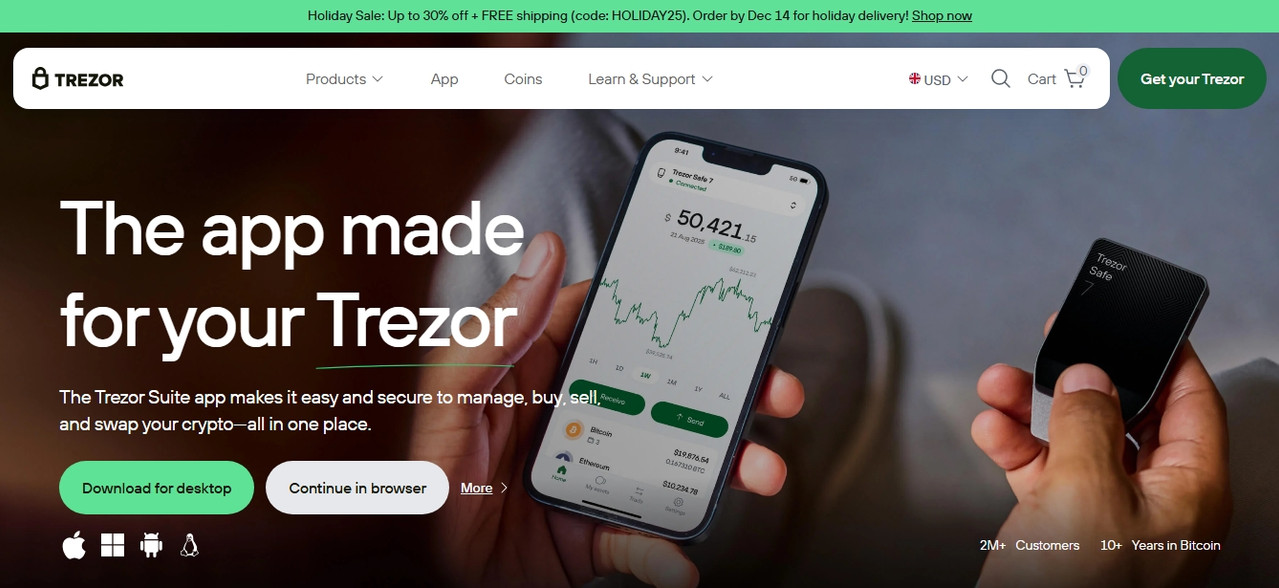
Trezor Login refers to the secure process of accessing and managing your cryptocurrency using a Trezor hardware wallet through official software such as Trezor Suite. Unlike traditional online accounts, Trezor does not rely on usernames, passwords, or centralized login systems. Instead, access is protected by your physical device, PIN code, and cryptographic verification.
Understanding how Trezor Login works is essential for maintaining security and avoiding phishing scams. This guide explains how to safely access your wallet, what “login” really means in the Trezor ecosystem, and best practices to protect your digital assets.
Unlike conventional platforms, Trezor does not require account creation or email-based login. When users refer to “Trezor Login,” they are usually talking about connecting their Trezor device to Trezor Suite or another compatible interface to manage cryptocurrency.
Authentication is performed using your hardware wallet. Your private keys never leave the device, and no sensitive credentials are entered into a website. This design eliminates many common attack vectors used against online wallets.
Traditional logins depend on usernames and passwords stored on servers, which can be compromised through data breaches or phishing attacks. Trezor uses a decentralized security model where access is controlled by the user alone.
With Trezor Login, you authenticate transactions and wallet access by physically confirming actions on the device itself. This ensures that even if your computer is infected with malware, attackers cannot gain access to your funds.
To access your wallet, connect your Trezor device to a trusted computer or mobile device and open Trezor Suite. The application will detect your device and prompt you to enter your PIN directly on the hardware wallet interface.
Once the correct PIN is entered, Trezor Suite unlocks access to your wallet accounts, balances, and transaction history. No passwords or online credentials are required at any stage.
Trezor Suite is the official application that acts as the interface between your hardware wallet and the blockchain. It allows you to manage assets, send and receive cryptocurrency, and configure security settings after you log in using your device.
Trezor Suite never stores your private keys. It simply displays information and relays signed transactions from your device to the blockchain network.
Your PIN is a critical part of the Trezor Login process. It protects your device from unauthorized physical access. Even if someone steals your Trezor, they cannot access your wallet without the correct PIN.
Trezor uses a randomized PIN entry layout to prevent keylogging and screen-capture attacks. This design adds an additional layer of protection when logging in.
For users who want enhanced security, Trezor offers an optional passphrase feature. A passphrase acts as an additional word added to your recovery seed, creating a hidden wallet.
When using a passphrase, logging in requires both your device and the correct passphrase. This protects your funds even if your recovery seed is compromised.
Trezor Login never requires you to enter your recovery seed during normal use. It also never asks for your seed on websites, emails, or pop-up messages.
If you encounter a page claiming to be a “Trezor Login” that asks for your recovery phrase or private keys, it is a scam. Official Trezor software only asks for the recovery seed during wallet recovery.
Phishing websites often imitate Trezor branding and claim to offer login or verification services. These pages are designed to steal recovery phrases and drain wallets.
Always verify the website URL before connecting your device. Bookmark official Trezor pages and avoid clicking links from emails or social media claiming urgent account issues.
One advantage of Trezor Login is flexibility. You can access your wallet from any compatible computer by installing Trezor Suite and connecting your device.
Because your private keys are stored on the hardware wallet, no data is lost when switching computers. Your wallet remains secure as long as you control your device and recovery seed.
If your Trezor device is lost or damaged, you can restore access to your wallet using your recovery seed on a new Trezor device. This process recreates your wallet exactly as it was.
During recovery, the seed must be entered directly into the device or through secure recovery methods. Never enter your seed into unofficial software or websites.
Always use the official Trezor Suite application and keep it updated. Firmware and software updates often include important security improvements.
Use a strong PIN, enable a passphrase if appropriate, and store your recovery seed offline in a secure location. Avoid using public or shared computers for wallet access.
A common mistake is confusing Trezor Login with exchange logins. Trezor does not manage accounts or store user data. Your security depends entirely on your device and backup practices.
Another mistake is trusting unsolicited messages claiming to be from Trezor support. Official support will never ask for login credentials or recovery phrases.
If you experience difficulty accessing your wallet, consult official Trezor documentation or support resources. Most login-related issues involve incorrect PIN entry or device connection problems.
Avoid third-party tools or unofficial “login helpers,” as these can compromise your security.
Trezor Login is a secure, device-based method of accessing your cryptocurrency without relying on passwords or centralized systems. By using your hardware wallet and official software, you maintain full control over your digital assets.
Understanding how Trezor Login works and following best security practices helps protect you from scams, malware, and unauthorized access. With proper care, Trezor provides one of the safest ways to manage cryptocurrency.